At a glance: This historical COVID-era article considers where and how to keep exercising. Physical activity supports general health, but does not guarantee protection against infection or replace recommended preventive care.
Context for this historical article
This article was written during the COVID-19 outbreak. Exercise supports general health, but it does not guarantee protection from infection or replace vaccination and clinical care. For current information, see the CDC guidance on immune health. Local restrictions and advice can change; check current guidance where you live.
Keeping a manageable training routine at home was one of the challenges of the COVID-19 outbreak. The useful question remains: how can you stay active with the space, equipment and capacity you have?

Regular physical activity supports general health. It does not guarantee protection from COVID-19 or another infection. The CDC’s current immune-health guidance places physical activity alongside other health habits and appropriate clinical care.
Choose where to train
Training at home can be convenient when travel, weather or access to facilities makes an outdoor session difficult. Outdoors can also be an option when it fits your circumstances. Follow current local guidance rather than the specific lockdown restrictions described in older articles.
If you feel unwell, consider postponing training and seek appropriate advice. A fitness routine is not a substitute for medical care.
Set a goal you can work on consistently
Choose whether your main goal is strength, a bodyweight skill, mobility or a regular activity habit. Different goals may require different exercise selections and demands. A productive session does not need to leave you exhausted.
The CDC describes the broader benefits of physical activity. Those benefits should not be turned into a promise that one workout length or intensity prevents respiratory illness.
Use progressive calisthenics at your level
A bodyweight exercise can become easier or harder through changes in position, leverage, range or assistance. Start with a variation you can control. Your current pushing ability may be different from your pulling ability, so one general fitness label is not enough to select every exercise.
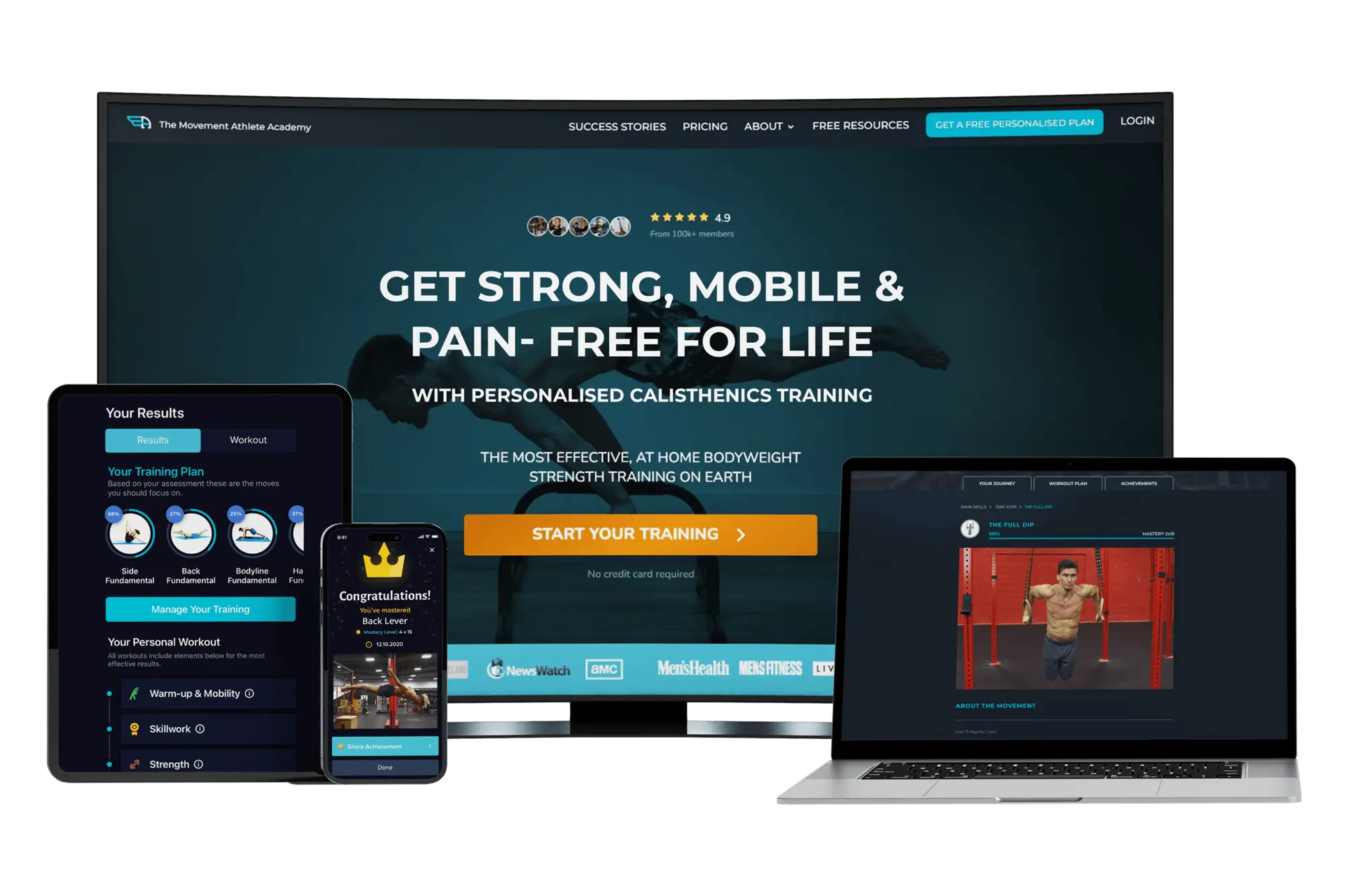
The Movement Athlete uses movement-specific starting points, progression paths and your reported workout difficulty to help organise training. The feedback loop concerns the work you perform; it does not automatically detect illness, sleep or stress.
Plan around recovery and other demands
A demanding session is not automatically better than a manageable one. Consider how your routine fits your current capacity and other commitments. Competition preparation may need individual coaching and a different plan from general fitness training.
Avoid blanket claims that all intense exercise weakens immunity or that all moderate exercise prevents infection. Neither is an appropriate rule for choosing an individual training plan.
Work with the equipment you have
Some calisthenics exercises can be done with floor space and a wall. Pulling and ring work require suitable support or equipment. Options can include a properly installed pull-up bar, rings, parallettes or resistance bands, depending on the exercise.
Use equipment designed for the task, check that supports are secure and choose exercises that fit your available setup.
Keep the principle behind the old story
The traditional story of Milo of Croton carrying a growing calf illustrates a progressive challenge. It is a teaching story, not a modern training prescription. For bodyweight training, the practical lesson is to develop the demand gradually rather than repeat a routine that has stopped matching your goal.
Build a routine you can return to
Choose a manageable starting point, practise with control and use your training feedback to decide what comes next. Consistent activity can support your fitness goals while medical prevention and treatment remain separate decisions.
Build a routine you can return to
For everyday training when you are well enough to exercise, TMA offers structured steps toward strength, mobility and bodyweight control. Exercise is not protection against infection.
The free assessment finds your current starting points across movement abilities and gives you a personalised training plan.