
WHAT WE BELIEVE
Somewhere along the way, fitness became only about how a body looks. We train for what yours can do.
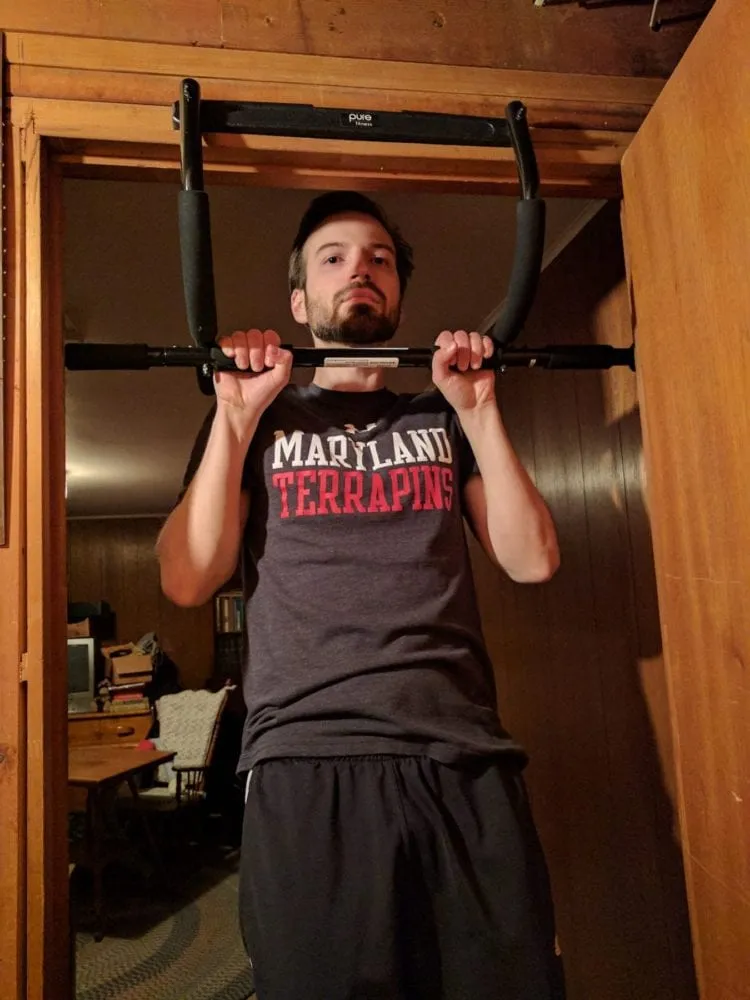
Most of us started there: chasing six-packs and bigger muscles, measuring progress in the mirror. We still want that — lean, dense, muscular is a fine goal. It just stopped being the whole goal: in the chase, strength you can use and joints that keep up fell off the plan.
You’ll find us anywhere there’s floor space: a parent training push-ups beside a cot, a desk worker unwinding his hips at lunch, a lifter humbled by the rings. All of it bodyweight, all of it building bodies that can do more, for longer.
WHAT IS A MOVEMENT ATHLETE?
A movement athlete wants to look strong and be strong. They build both with their own bodyweight: strength, mobility and skill trained together, in small steps from their exact current level, using progressive calisthenics. And they enjoy the work, because a practice you enjoy is one you keep.
We are movement athletes
Sixteen beliefs, one aim: to build strength, mobility and agility, not just the look. We’ve trained by them since the beginning, and they have not changed.
We don’t exercise. We move
“Exercise is optional. Movement is essential.” We refuse to think of movement as an obligation, a chore, a necessary evil called exercise. We refuse to suffer purely for aesthetic results. We move because we enjoy it, because it makes us feel alive, because this is who we are.
Movement is freedom
We refuse to be confined by machines, places and facilities. We embrace our freedom wherever we are, using our bodies and our environment.
We move to play
Movement is fun, play, expression and creativity, the things we tend to suppress as we mature. So we play, explore, enjoy the moment. Movement for movement’s sake.
Our body is our gym
We use our own bodies to progress. It’s us, our bodies and the world. We are movement opportunists — we fold movement into life wherever and whenever we can, and use our own body’s resistance to push through boundaries. We use our own bodyweight to build strength progressively: the harder position is our heavier weight.
Our goals are process, progress and practice
When aesthetics, scale weight or out-lifting the next person become the only goals, they pull us away from what matters: the here and now, and the practice itself. We want new moves, new skills, more strength. Some weeks give more than others; we show up either way.
We cultivate the connection of mind and body through movement
We use movement to reconnect with our bodies. Every movement practice is physical, but the goal, direction and passion behind it are never one-dimensional. The mental and emotional sides run far deeper than they look from the outside. Ten minutes of focused balance work can quiet a whole day’s noise.
We feel our bodies and let them guide us
We train body awareness and read our body’s signals. There is no single magic formula for everyone, and training is never linear. We learn to interpret what our bodies tell us and adjust the training as needed.
We learn skills and movement patterns
Train, but train movement, not muscles. By focusing on movement patterns, and learning to call on the body to work as a whole, a mover can cross between disciplines and pick up new styles and systems far more readily. Every skill we chase has a full progression path, so the pattern is learned first and the skill follows.
We build all round capabilities
A big engine doesn’t guarantee good driving. Strength, power and endurance matter, but on their own they don’t always translate to skilful movement. So we build it all together: strength, mobility, control. Even muscle comes in three kinds: show muscle, go muscle and flow muscle. A single push-up progression builds all three simultaneously.
Movement is a priority, passion and obsession
Find the movement you love. Turn it into your passion, and let it become your obsession.
We honour and celebrate our bodies, and each other
Everyone has a different body, shape and set of abilities. We move to celebrate those differences and to express ourselves. We may be at different levels and live different lives, but at the most basic level we are all movers — and we all have the same worth. We are in this together.
We embrace our imperfections
We are human, and we always start imperfectly. Moving imperfectly beats not moving. We stay open to trying new things and being really bad at them. That is how we get better and stronger.
We are grateful for progress and celebrate all successes
We lead with gratitude: for our bodies, our environment and each other. Movement is how we give thanks for all three, and no progress is too small to count.
We feel and honour our environment
Where we can, we move in nature. We are built to move in all sorts of natural environments, and we touch the world with our senses — barefoot, even hugging a tree if we feel like it. Our environment is part of our practice. We respect it, and we love it.
We have an open mind, always
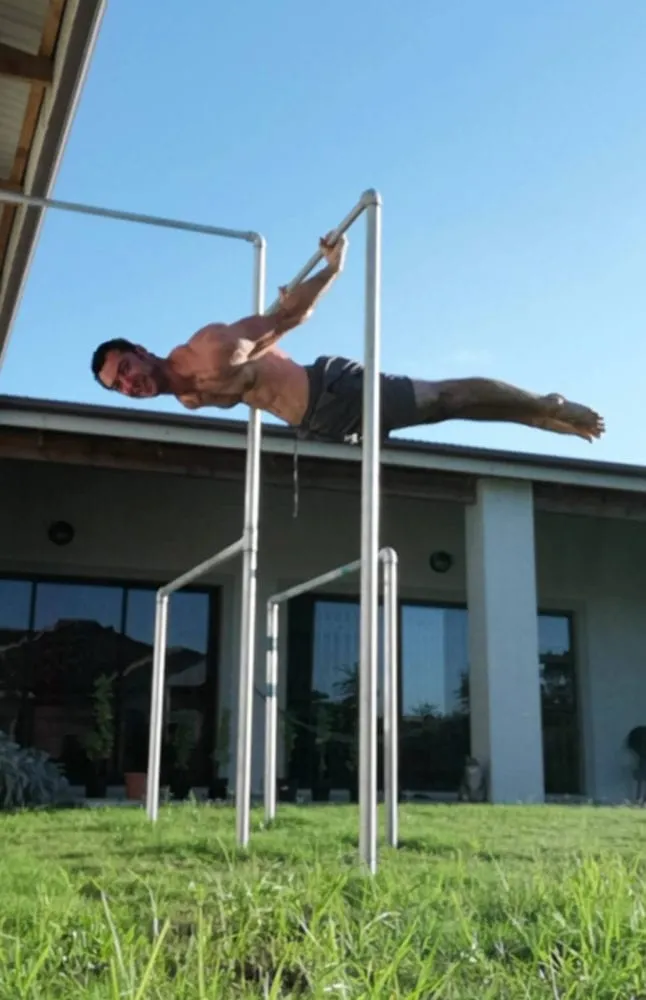
The hallmark of a mover is an open mind. Many practitioners have their specialities, but few true movers limit themselves to a single discipline. We honour other disciplines, and we learn from them.
Movement is the way of being
Movement is how we live. It shows up when we carry the shopping, get off the floor in one motion, or swing a child overhead. The practice never clocks out.
What a movement athlete actually trains
A body that can do things, and keeps doing them, has to be built. And the building needs a method — enthusiasm without structure is how people get stuck.
Strong muscles don’t protect weak movement patterns. Our Head Coach, Jesse, learned this the hard way: he could bench 300 pounds, and his shoulder still gave out — rotator cuff surgery, months of rebuilding. The strength was all there; the movement his shoulder needed had never been trained.
Our method is progressive calisthenics, and it begins with honesty about where we are. Broad labels like “beginner” or “advanced” hide too much, because push, pull and mobility sit at different levels in every individual. So we start from our exact level on every movement, and the assessment finds it before the first session.
From there, progress means graduating to a slightly harder variation whenever the one we’re on stops being hard. The steps stay deliberately small, so tendons and joints get time to adapt along with the muscles.
And the challenge adjusts to us. After each exercise we rate how hard it felt, and the training that follows takes it into account. We stay the ones reading our bodies. Hard days earn easier work ahead; strong days, a step forward.
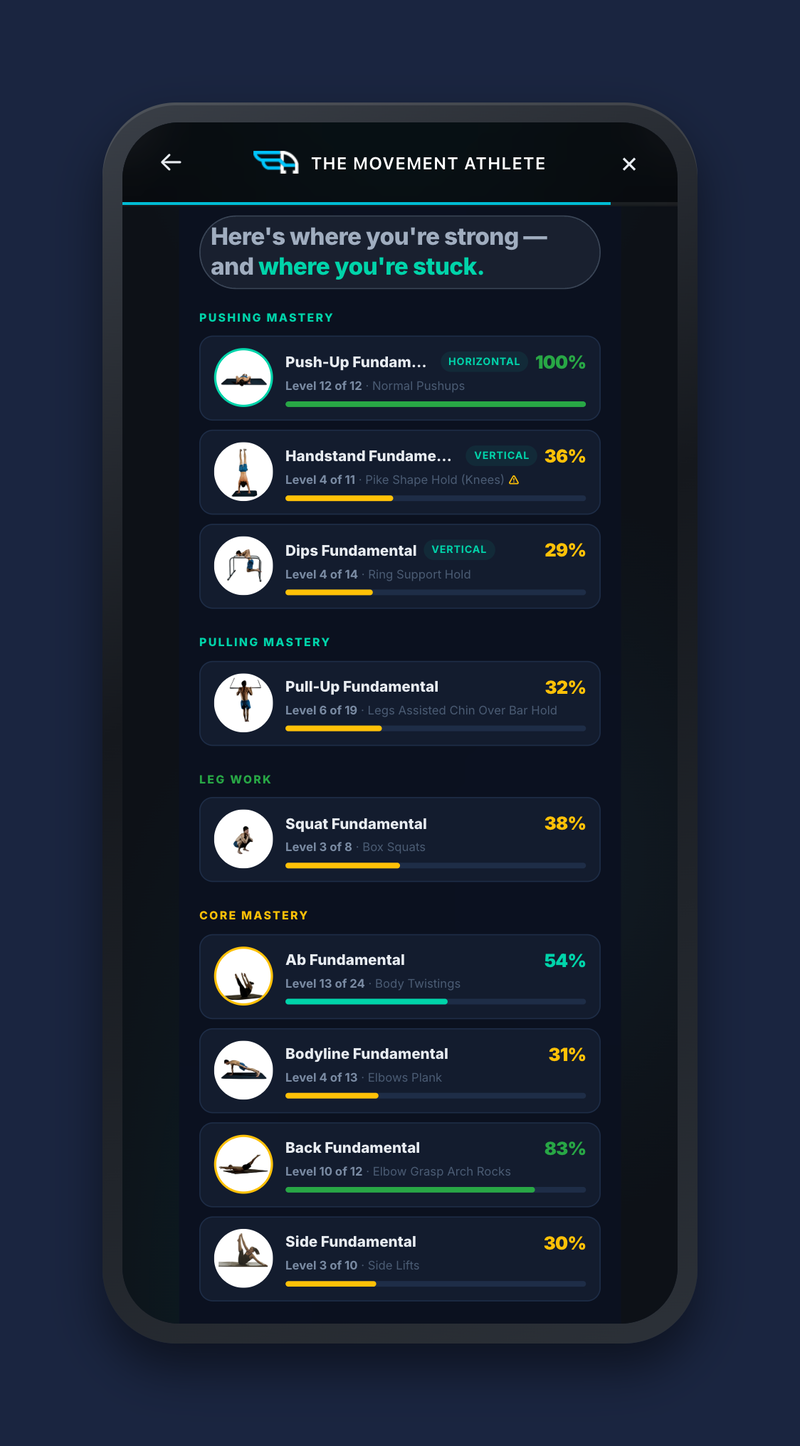
Strength, mobility and skill grow in the same sessions, built around 100+ progression levels across the 9 Fundamentals: Push-Ups, Handstands, Dips, Pull-Ups, Abs, Side, Back, Plank and Squats. From there the skill map keeps opening out, each new skill unlocking like a level in a game. There’s always a next step that’s ours.
Who movement athletes are
Our members are engineers, pilots, developers and parents — ordinary people who decided to be more capable as they grow older, not less.
Anyone can be strong, and every body belongs here exactly as it arrives. You start at whatever level today finds you, and that is enough.
“I really went from goals like "more muscle" or "less fat" to actual skills that I find bring me joy and sense of accomplishment like handstand.”
— Hugo, member
“This makes my body feel genuinely stronger and more durable instead of beaten up.”
— squizzeyt, member
“this became a way of living for me, not a program you finish. cant see myself stopping”
— tido.k, member
Where the manifesto becomes practice
Where people stall in bodyweight training is the programming: which variation to do today, how hard it should be, when to move up. Worked out by hand, across every movement, that is a full-time job.
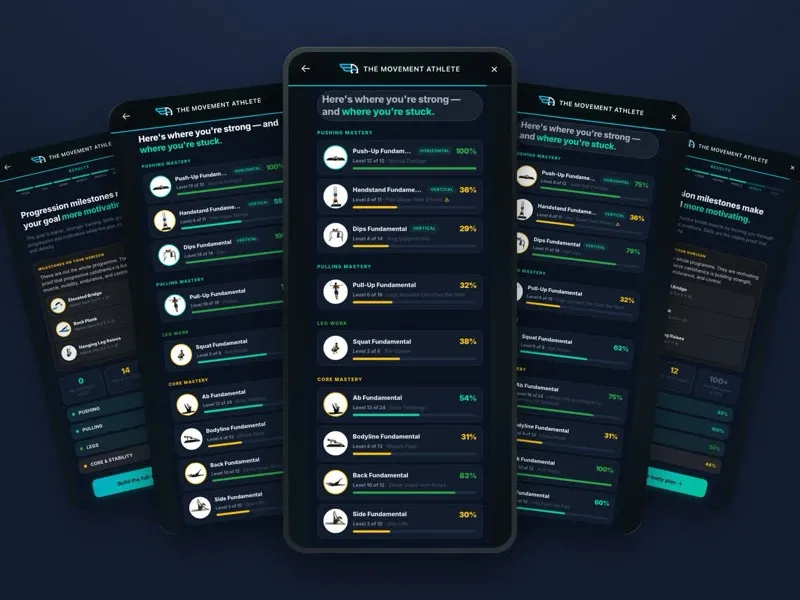
That’s the job The Movement Athlete automates. A free 3-minute assessment finds what your body can do right now, movement by movement, and builds your personalised plan from it.
The first step
Find your exact starting level
Three minutes, free. Your current level on every fundamental, and a plan with the next small step on each.
- Built by physiotherapists, gymnastics coaches and elite calisthenics coaches
- Backed by the LEAD Sports Tech Accelerator — run by the Adidas family and ex-Red Bull executives
- 100,000+ athletes · 4.8★ member rating · 47 countries
- 2,000+ exercises · 100+ skills with full progression paths
LIFE WITHOUT MOVEMENT GOES NOWHERE
WHEN WE MOVE MORE, WE FEEL MORE, WE EXPERIENCE MORE
WHEN WE FEEL MORE, WE LIVE MORE
IT’S TIME TO FORGET ABOUT EXERCISE AS IT IS
COME AND PLAY WITH US
LEARN NEW SKILLS
MASTER MOVEMENTS
GET STRONGER
GET BETTER
HAVE FUN
LIVE MORE
Your starting level is three minutes away.
A few quick questions about what you can do today. That’s all it takes.
Questions people ask
What is a movement athlete?
Someone who measures training by what it lets their body do, and how long it stays able to do it: strength, mobility and skill built with their own weight, in progressions that start from what they can already do. There’s no entry bar: a first wall push-up counts as much as a planche.
Is “movement training” a real method or a buzzword?
The phrase gets used loosely, but the method underneath is real: progressive calisthenics, drawn from gymnastics coaching. It means finding where you stand in each pattern, advancing through harder variations as the current one gets easy, and training mobility inside the strength work itself. Gymnasts have trained this way for decades; the name is the only recent part.
Is The Movement Athlete for beginners?
Yes — the placement exists for beginners most of all. The assessment asks what you can do today, so your first push-up progression might start at the wall. It isn’t built for two goals: chasing maximum muscle size, and physiotherapy or rehab. Everything else starts from wherever you are.
Do I need a gym or equipment?
No gym. Your body provides the resistance, and difficulty comes from changing your position: a steeper angle, a longer lever. Most training needs only floor space. As you progress into pulling skills, a pull-up bar or rings become useful, but nothing is required to start.
How do I find my level?
Take the free assessment. It asks a few questions about what you can currently do and builds your plan from the answers, with the next step marked on every progression. Expect accurate placement rather than flattery; the plan only works if it starts where you really are.