
📖 Read Time: 6 Minutes
🏋️ Join the tribe of Movement & Calisthenics Athletes
People just like you that are working with their own body weight to get strength, lose fat, build muscle, recover from injuries and live their best lives!
This is the story of Ryan – The Movement Athlete
Ryan is an independent analyst. He spends his time traveling to and working in remote places all around the world. After a nasty injury he needed to find a different way to workout…
“Fitness has definitely become less of a thing I do, and more of a way I live”
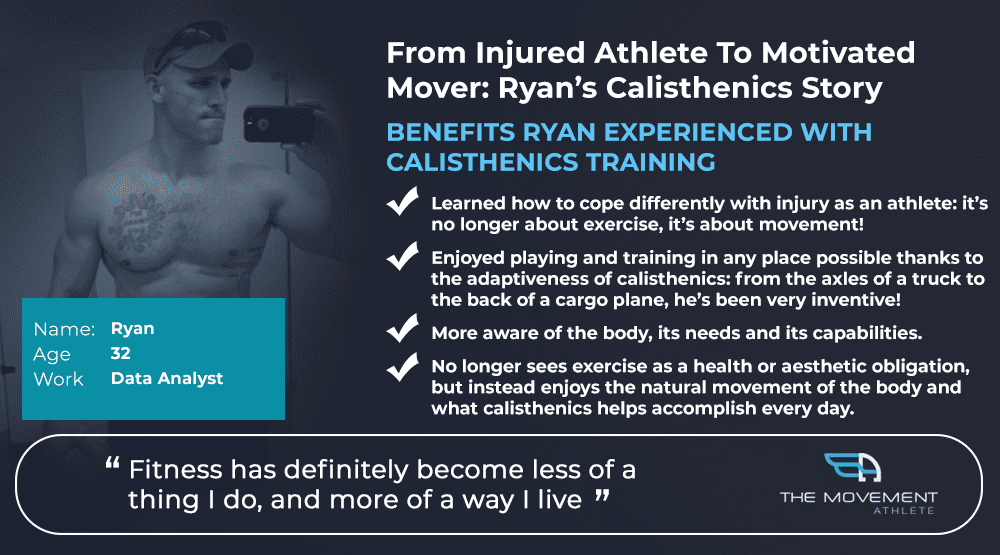
Staying in shape as a traveler is always a big challenge, and one Ryan struggled with.
He’s always been an athlete, playing American football and rugby at university. At the time, he focused mainly on weight training and cardio. A work injury involving abdominal tears made him unable to do usual workouts, and in search of an alternative that would keep him moving without making the problem any worse.
“I was immobile for a few weeks and not much more mobile for a good quarter of the year. It pretty much ended my regular regimen, and put off serious weight training for a solid six months, so I needed to find some kind of workout I could scale to my limitations.”
His father had been training for a while, and is the one who introduced Ryan to new approaches to training.
“My dad had recently recovered really well from back surgery and he recommended Pilates and calisthenics – so I listened to the old man.”
From Weight Training Struggles to Calisthenics Success
“Years of weight training was making my body fall apart and I was worried about my pain – like it’s going to create bigger problems down the road.”
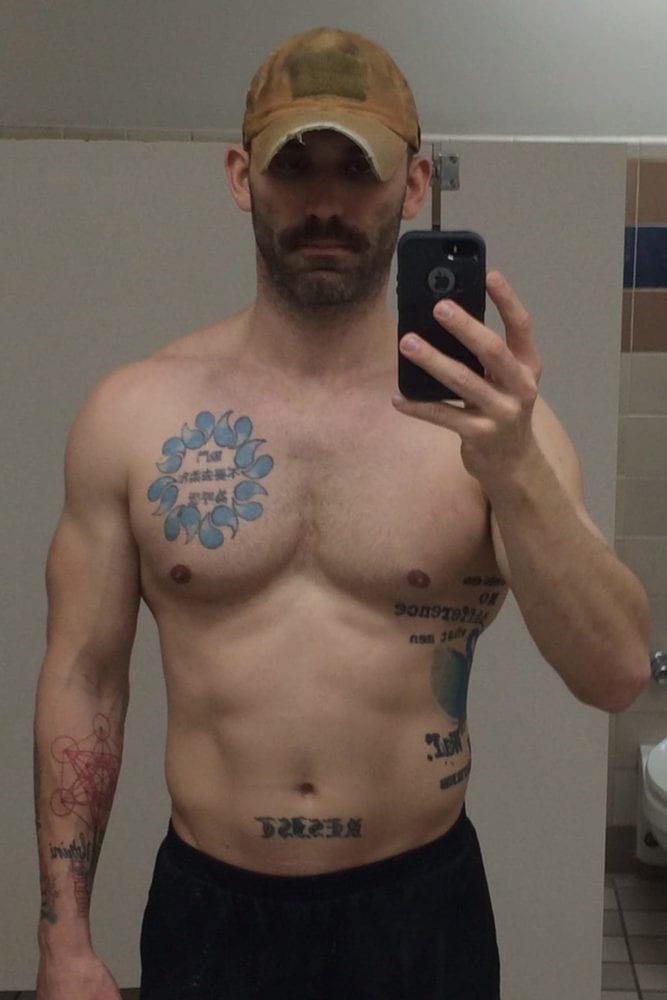
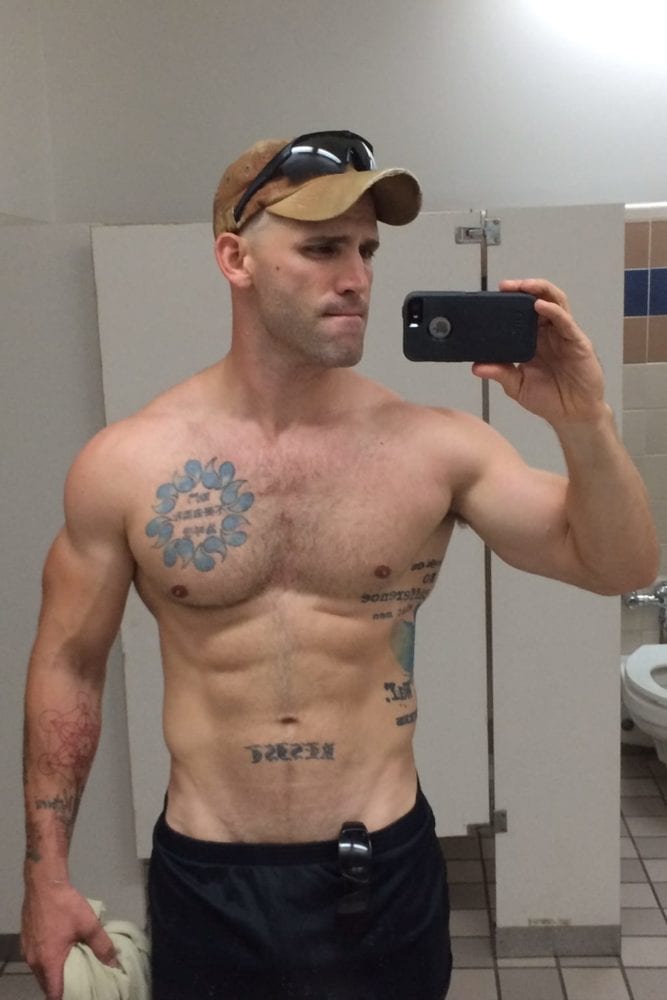
“I realised that my whole training philosophy needs to change. Years of weight training was making my body fall apart and I was worried about my pain – like it’s going to create bigger problems down the road.”
“I knew bodyweight training is the way to go. I wanted to do workouts that are:
💪 Adapted specifically to me
💪 Progressive (so get slowly and incrementally harder)
💪 Include a lot of mobility so that I can avoid injury and stay safe”
He tried calisthenics out for himself, and struggled with the lack of progress he first experienced.
“When I first got started with calisthenics, it was difficult to measure progress and I wasn’t seeing the familiar gains I expected. I needed a program that will guide me and that’s how I found The Movement Athlete.”
Not sure where to start with your own calisthenics journey? Take our free assessment to get a personalized training plan based on your current fitness level.
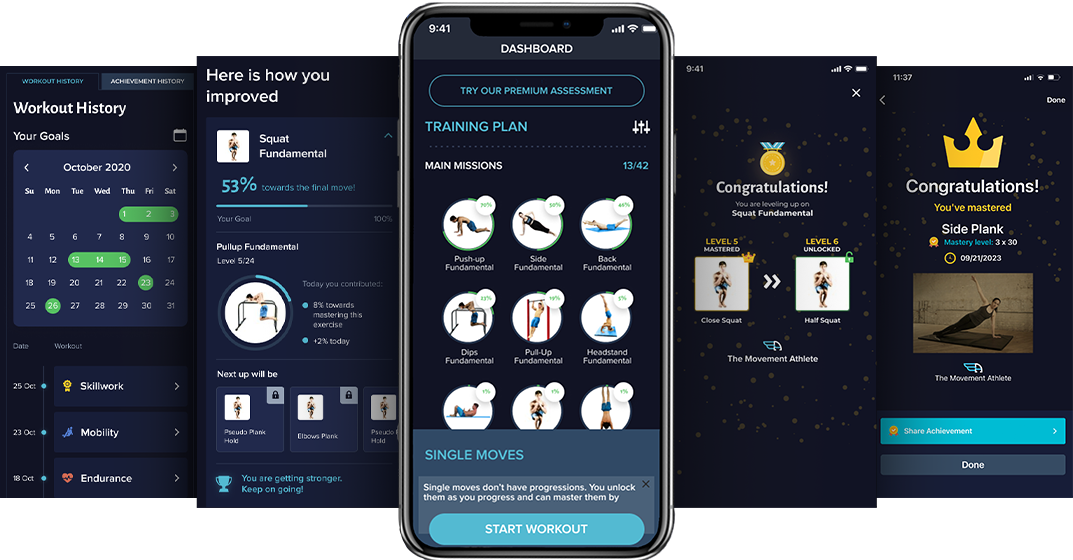
💡 Key Takeaway: The Movement Athlete Academy was everything I was searching for. They provide an incredible platform that’s not only personalised but it’s progressive and it will guide you through your training for years.
It gives me a sense of reward, of satisfaction, of achievement as I unlock moves and level up. I feel so much more motivated seeing my progress in the app and knowing that I will not end up crippled with aches and pains or another injury. I am feeling healthiest and strongest I have ever been
4 Life-Changing Benefits Ryan Gained
1. A Changed Mindset for Dealing with Injury
Calisthenics helped Ryan recover much faster than he imagined he could. In fact, he barely lost any of his base-fitness level, “because of the scalability and regularity of the workouts. I was also able to identify new areas to improve.”
More than just recovering, calisthenics seems to have taught him to cope with injury differently. The steps he took to recover involved both taking action and understanding his own mind better than he had before.
“I’ve learned to deal with injury by doing something – anything – that lets me see even the smallest growth. My most recent injury required me to have a substantial amount of metal removed from my leg, so at 32 that meant I was off my feet for weeks.”
2. Freedom in Movement
Since starting calisthenics, Ryan has experienced an openness and a flexibility in his training routine that never really had before.
“Life used to be governed by hard and fast gym times, but now I’m free to build my days around workouts but all the while listening to how I feel that day and responding appropriately in my regimen.”
The Movement Athlete has offered him a safe structure in which he has the freedom to explore and play. “Fitness has definitely become less of a thing I do, and more of a way I live…I always built my days around workouts but now I build workouts into my days.”
3. Learning to Listen to Your Body
The results an athlete might expect with weight training just don’t happen at the same speed in calisthenics. For anyone who’s transitioning from weight training to calisthenics, Ryan’s experience shows that you’ll need patience…and a lot of it.
“Be patient and observant. If you’re like me and are used to seeing the types of gains that come from weight/sport training, you need to let yourself learn the language of calisthenics. Gains come but they’re different, your body’s language is different. So don’t give up, invest and listen, because it really is like learning a new language.”
4. He Can Train Anywhere
Ryan has had a lot of fun exploring the spaces that would allow for a workout. “I’ve trained anywhere from large chain gyms, beaches, freight containers, the back of a cargo plane and a semi truck, hotel rooms and my kitchen. I’ve been pretty creative sometimes – doing vertical pulls on truck axles was a greasy favorite.”
Ryan’s Advice for Getting Started
“Start with one round, or one exercise even. Build that into your day and commit to it, even if just that one day. After that, I like to use the tag #dontgotobedlazy on my more inactive friends, because if all you do is pull up the app and do some push-ups or planks before bed, then you’ve started something you can work with.”
More than that, though, calisthenics challenged his views of what exercise was meant to look like.
“The hardest part of calisthenics has been the patience it requires me to have with myself.” With weights or cardio I could just power through plateaus or problem areas: add more weight, run faster.
“At the end of the day I’d just be more sore or nauseous, but with calisthenics I’m identifying really functional performance errors in myself, that can’t be overcome by more weight or gutting it out – corrections take patience and acceptance.”
“You only need the will to do [calisthenics]. You don’t need workout clothes, equipment, or to go to a gym full of people watching you. Find a quiet spot where you feel comfortable, pull up a workout and see how rad it is to be honest with yourself. Then just go from there.”
Related Articles You’ll Love:
Ready to get started?
Get your free personalized training plan now